She Swore She'd Never Raise Her Voice Like Her Mother Did. Then Her Daughter Stopped Listening Completely — And She Learned Something No Gentle Parenting Page Ever Told Her.

You have said it three times already this morning.
Not shouted it. Not even raised your voice. You said it calmly, the way every article told you to, the way you promised yourself you would.
And your child looked at you and kept doing exactly what you told them not to do.
Why is this not working. I am doing everything right.
You explain again. You get down to their eye level, like you read somewhere. You use your calm voice, the one you had to practice because it did not come naturally to you.
Nothing changes. If anything, it gets worse. By the fourth time, your calm voice is not calm anymore.
And then you hear it. The exact tone. The exact words your own mother used to say to you, coming out of your own mouth, aimed at your own child.
I sound just like her. I said I would never sound like her.
You go quiet. Not the peaceful kind of quiet. The kind where you are standing in your kitchen not knowing whether to feel ashamed for losing your calm, or ashamed for how little authority you seem to have left in your own house.
If this is you, you already know the rest of the story before I tell it. You know the sticker charts that worked for four days and then meant nothing. You know the counting to three that your child now says back to you, mocking, before you even get to two. You know the time-outs your child simply refuses to sit through, and the quiet panic of not knowing what to do when a four-year-old is physically stronger than your patience.
You know the specific humiliation of your mother-in-law watching your child ignore you completely, and saying, in that voice, "this is what happens when you don't discipline a child properly."
You wanted the ground to open up right there in the living room.
What I am about to tell you is not another article telling you to be gentler. You have tried gentle. Gentle is not the problem. What nobody told you is that gentle without a floor is not kindness. It is a house with no walls.
Keep reading. This gets very specific, very fast.

The Night I Realized Being Gentle Was Not Enough
My name is Ngozi. I have two children, one is seven, one is four. And for almost two years, I thought I was doing everything right.
I grew up in a house where you did not ask questions. My mother's word was law, and if you broke that law, you found out quickly and painfully what happened next. I am not going to pretend that house did not shape me. It made me obedient. It also made me afraid of her for a long time, in a way I did not want to repeat with my own children.
So when I became a mother, I promised myself something simple. I would never make my children flinch. I would explain instead of hit. I would talk instead of shout. I read everything I could find about gentle parenting, and for the first year, I felt like I had finally broken something my mother never could.
Then my daughter turned six, and something shifted.
It started small. She would ignore the first instruction. Then the second. I would explain calmly why we needed to leave the toys and get ready for school, and she would look at me and continue playing as if I had not spoken at all.
I told myself this was normal. Children test boundaries. I read more. I tried the sticker chart. For four days it worked beautifully, and I felt like the parent I always wanted to be. On day five, she looked at the chart, looked at me, and walked away from it entirely.
I tried counting to three. The first few times, it worked, mostly out of surprise. Within two weeks, she was counting along with me, giggling, waiting to see what would happen at three, which was usually nothing, because I did not know what came after three.
I tried time-outs. She refused to stay. I did not know whether to physically hold her there, which felt wrong, or let her walk away, which felt like giving up entirely.
Every failed attempt chipped away at something. Not just my patience. My sense of who I was as a mother.
The breaking point came on an ordinary Tuesday. My mother-in-law was visiting. My daughter refused to greet her properly, refused to sit still for five minutes, and when I asked her calmly to behave, she looked directly at me and kept doing what she wanted. In front of my mother-in-law. In my own living room.
My mother-in-law did not need to say much. Just one sentence. "This is what happens when you don't discipline a child properly." And then a look that said the rest.
I smiled through it, the way you do, and later that night I sat on the edge of my bed and cried in a way I had not cried in years. Not because of what she said. Because some part of me was afraid she was right, and I did not know how to fix it without becoming the mother I swore I would never be.
Maybe gentle parenting is a lie. Maybe I have to choose between fear and chaos.
A few weeks later, a friend of mine, someone whose children I had always quietly admired for how calm and respectful they were without ever seeming afraid, sent me a message. She had heard, through the family grapevine, what happened with my mother-in-law. She did not lecture me. She just said one thing that stayed with me.
"You are not too gentle. You just never learned how to hold a boundary. Explaining is not the same as holding a line."
I did not fully understand what she meant until she showed me. Not a philosophy. Not another theory about feelings and validation. Actual words. Actual scripts. What to say in the exact thirty seconds when a child ignores an instruction, before it becomes a battle of wills.
I was skeptical. I had read so many things that promised transformation and delivered nothing but more guilt. But I was also desperate enough to try one more thing.
The first time I used it, my daughter tested me exactly the way she always did. Except this time, I did not explain a fourth time. I said the boundary once, calmly, and I held it, using language that did not shame her and did not threaten her, but also did not move. She pushed. I did not raise my voice. I did not repeat myself five times. I held still.
She was confused for a moment. Then, for the first time in months, she actually did what I asked.
It was not instant magic. There were days it did not go perfectly. But something had changed in the pattern. I was not explaining anymore. I was holding. And she could feel the difference, even if she could not name it.
Within two weeks, the ignoring reduced. Within a month, my mother-in-law visited again, watched my daughter respond to a single calm instruction, and said nothing at all. Which, from her, was the closest thing to approval I was going to get.
I started sharing what I had learned with two other mothers in my building. Both of them came back within days saying the same thing. It was not that they needed to be gentler. They needed a floor under the gentleness. A place where explanation stopped and a held boundary began.
That is what I eventually packaged into something complete.

Boundaries Without the Belt
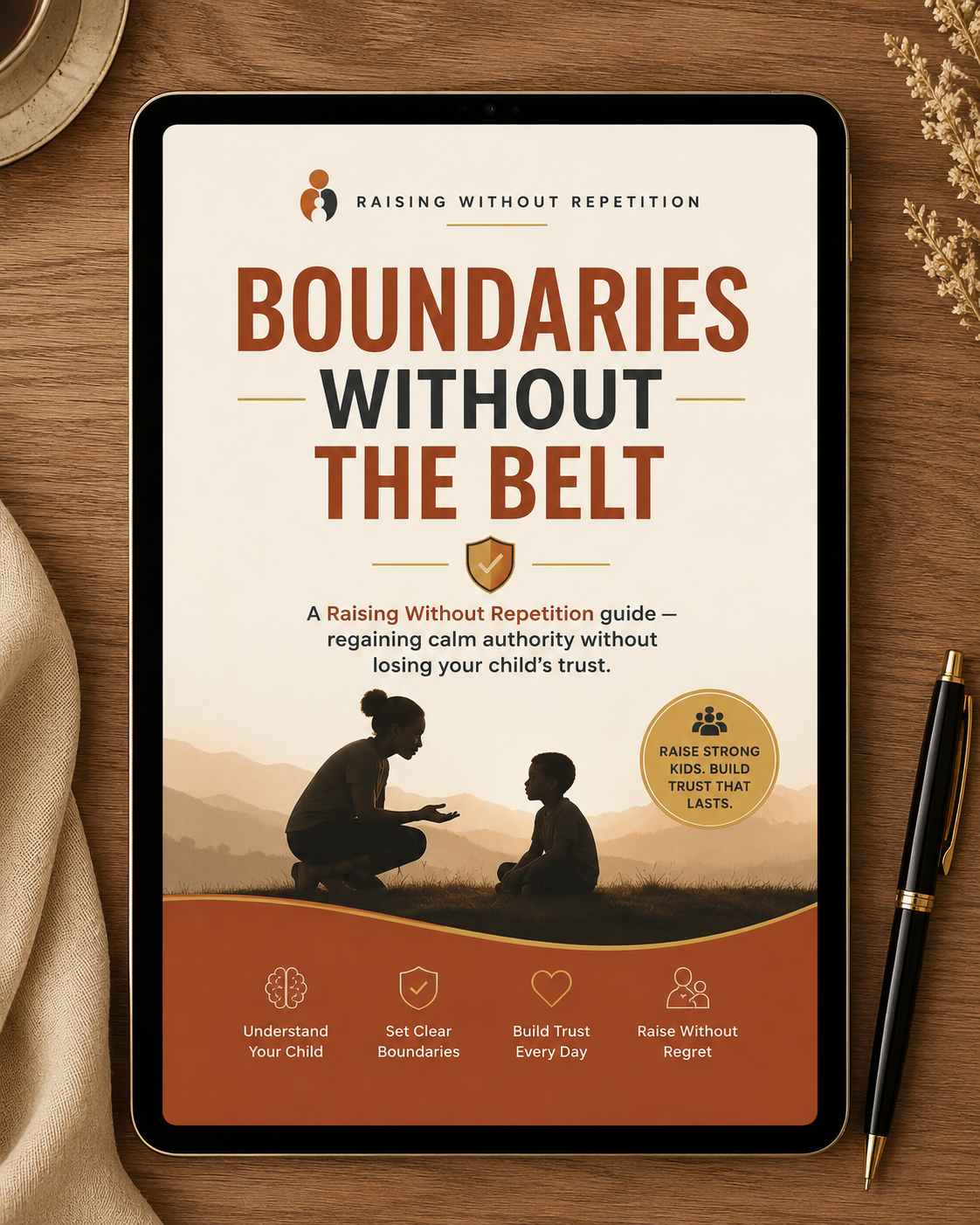
What Is Actually Inside
The Collapse Pattern Assessment
Before you can hold a boundary, you need to know exactly how yours has been collapsing. This section walks you through a short assessment that identifies whether you are an Over-Explainer, a Guilt-Avoider, a Conflict-Avoider, or an Exhausted-Negotiator. Most mothers recognize themselves within the first two pages, and that recognition alone changes how the rest of the guide lands.
Age-Banded Scripts for the First Sixty Seconds
This is the heart of the guide, and the part every mother says she reads first and returns to most. Separate scripts for toddlers, school-age children, and tweens, built specifically for the exact moment defiance begins, before it becomes a shouting match or a standoff. No theory. Just the words to say and the tone to say them in.
The In-Law and Family Interference Script Sheet
What to say, calmly, when a mother-in-law, elder, or relative criticizes your discipline choice in front of your child. This is the section most guides never include, and the one most Nigerian mothers say they needed most.
The Unaligned Co-Parent Playbook
If your husband or partner is not yet on the same page, this section shows you how to hold a consistent boundary at home even when the other parent undermines it, without turning discipline into a marital argument in front of the children.
The Repair After Rupture System
Some days will not go perfectly. You will still raise your voice sometimes. This section teaches you exactly how to reset with your child after a bad moment, without undoing the boundary you just worked to hold.
The Boundary Held Daily Tracker
A simple one-page tracker to mark, honestly, whether a boundary held or slipped each day. Most mothers say this small habit is what made the change feel real instead of theoretical within the first two weeks.
The Fourteen Day Rebuild Timeline
A day-by-day guide for the first two weeks, so you are never wondering what to focus on next. Structured, but forgiving of the days that do not go as planned.
Why This Actually Works, When Sticker Charts Did Not
Almost every parenting resource available today was written from one direction only. It assumes you are too harsh, and it teaches you to add warmth. That is useful if warmth is what you are missing. But if you have already spent two years being warm, patient, and endlessly explaining, adding more of what you already have will not fix anything.
What you are missing is not warmth. It is a floor. A place where explanation stops and a calm, held boundary begins.
This is the part almost nobody names clearly. Children do not need their parent to explain a rule seven times. They need to feel, in their body, that a limit is real. When a boundary is repeated, negotiated, and eventually abandoned, a child learns that no is simply the opening offer in a negotiation. That is not a discipline problem. That is a floor problem.
Boundaries Without the Belt is built around a single shift. You stop trying to win agreement in the moment, and you start holding a calm, warm, unmovable line. The scripts inside are not about being colder. They are about saying less, and meaning every word of it.
This is not punishment dressed up in new language. It is not a return to fear. It is the missing middle between the house you grew up in and the house you have been trying to build. Warmth stays. Fear does not return. But the floor is finally there.
Just So You Know, Putting This Guide Together Cost Me Over ₦380,000
I did not want to release something built on guesswork. Every naira below went into making sure this actually works before I ever offered it to another mother.
| Research and buyer interviews | ₦95,000 |
| Writing and content development | ₦120,000 |
| Professional editing | ₦60,000 |
| Design and layout | ₦75,000 |
| Testing with 10 real parents before launch | ₦30,000 |
| Total | ₦380,000 |
I am telling you this not to impress you, but so that when you see the price further down this page, you understand exactly what stands behind it.
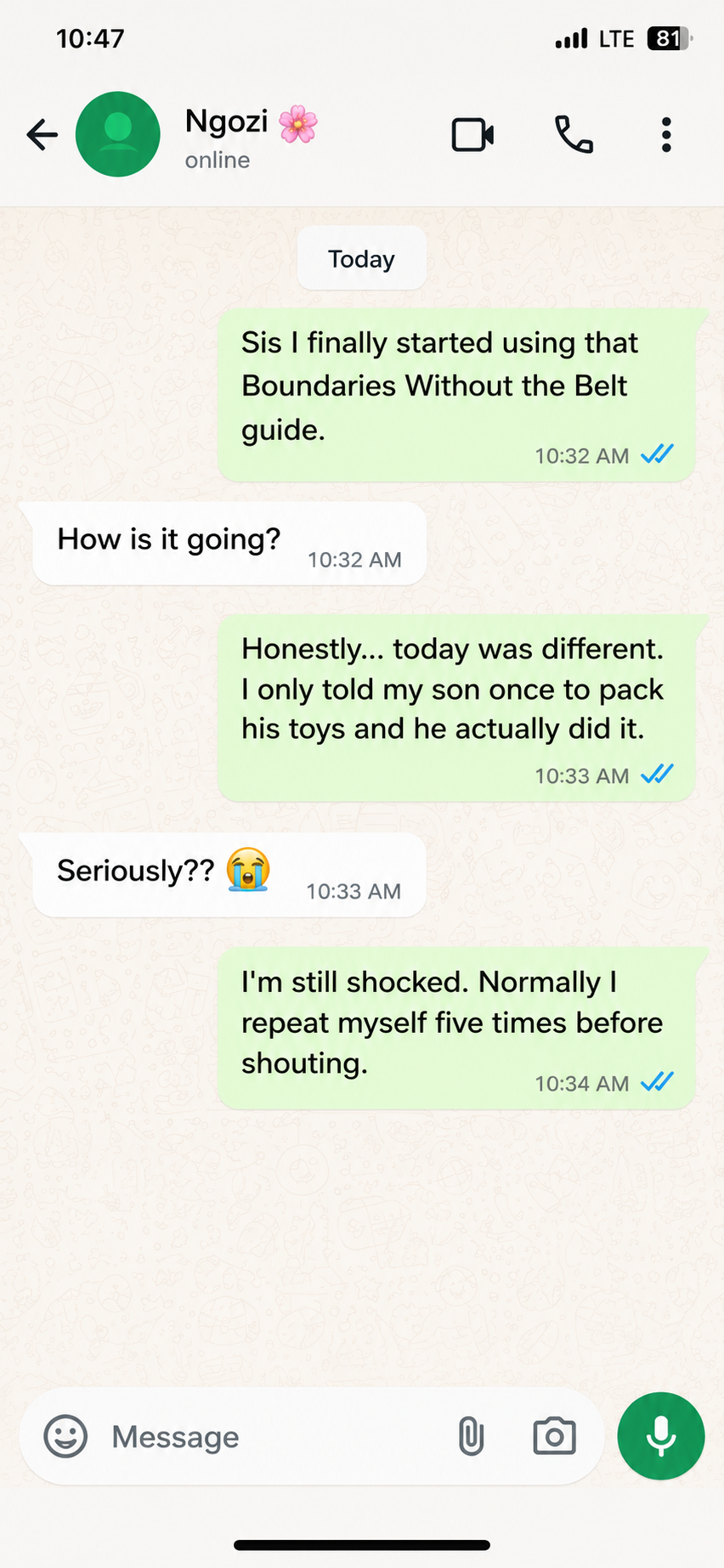
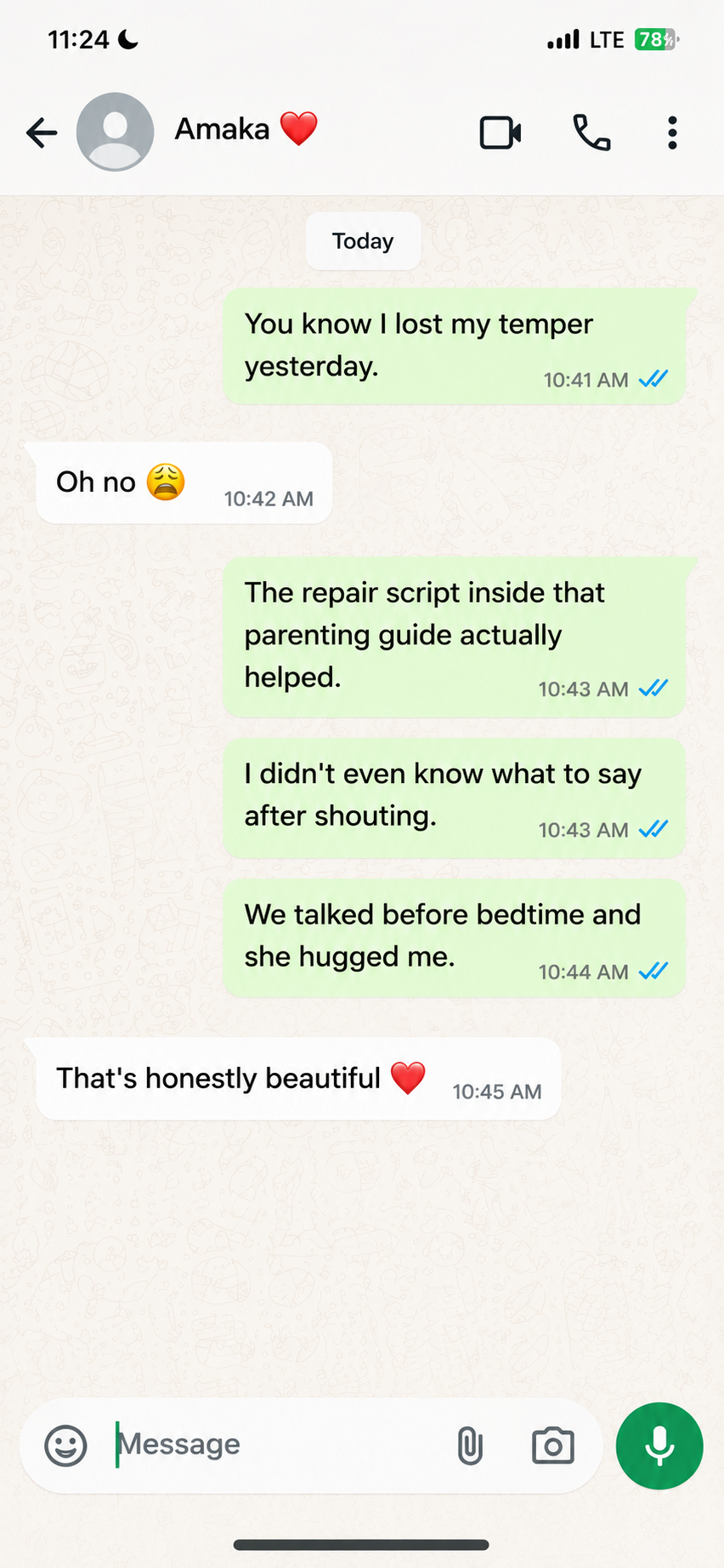
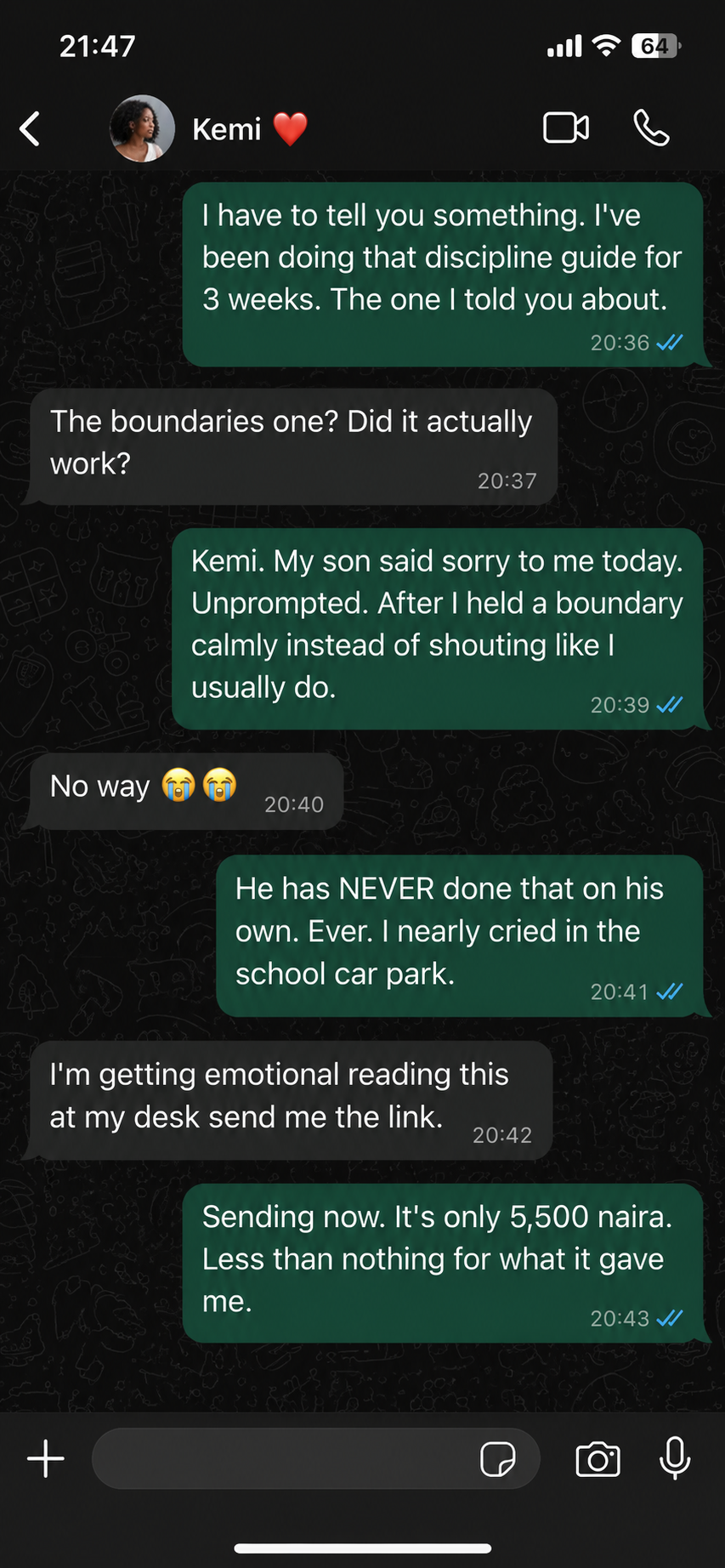
What Other Mothers Are Saying
Here Is What This Actually Costs You Today
I am not going to charge you ₦380,000, what it cost to put this together.
Not even ₦20,000, what a single session with a parenting coach or therapist could cost you.
Not even ₦16,000.
WAIT, I Have FREE Gifts For You
When you get Boundaries Without the Belt today, you also receive these, at no extra cost.
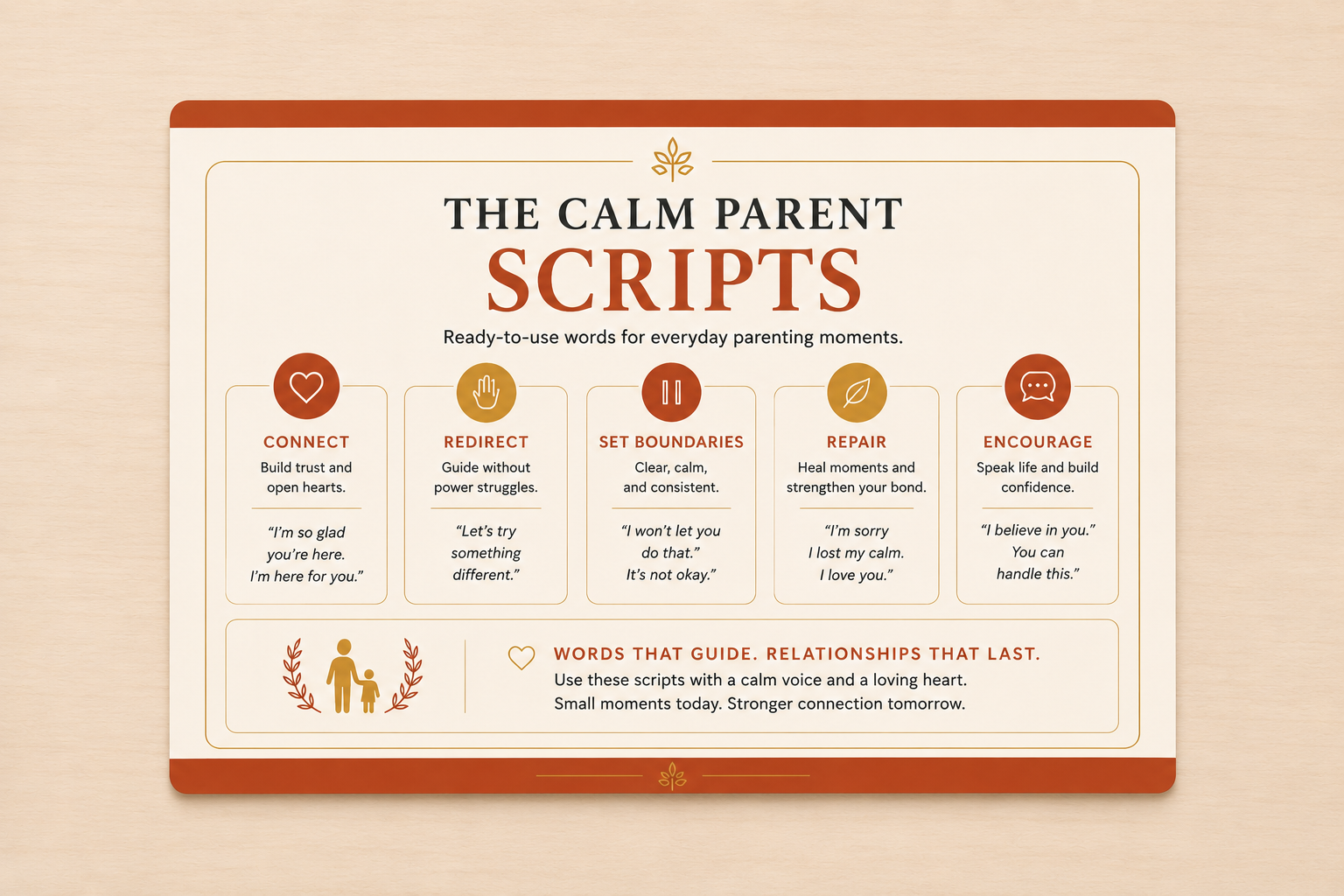
The Calm Parent Scripts
100 ready-to-use phrases that help you correct, redirect, and discipline without shouting or threatening.
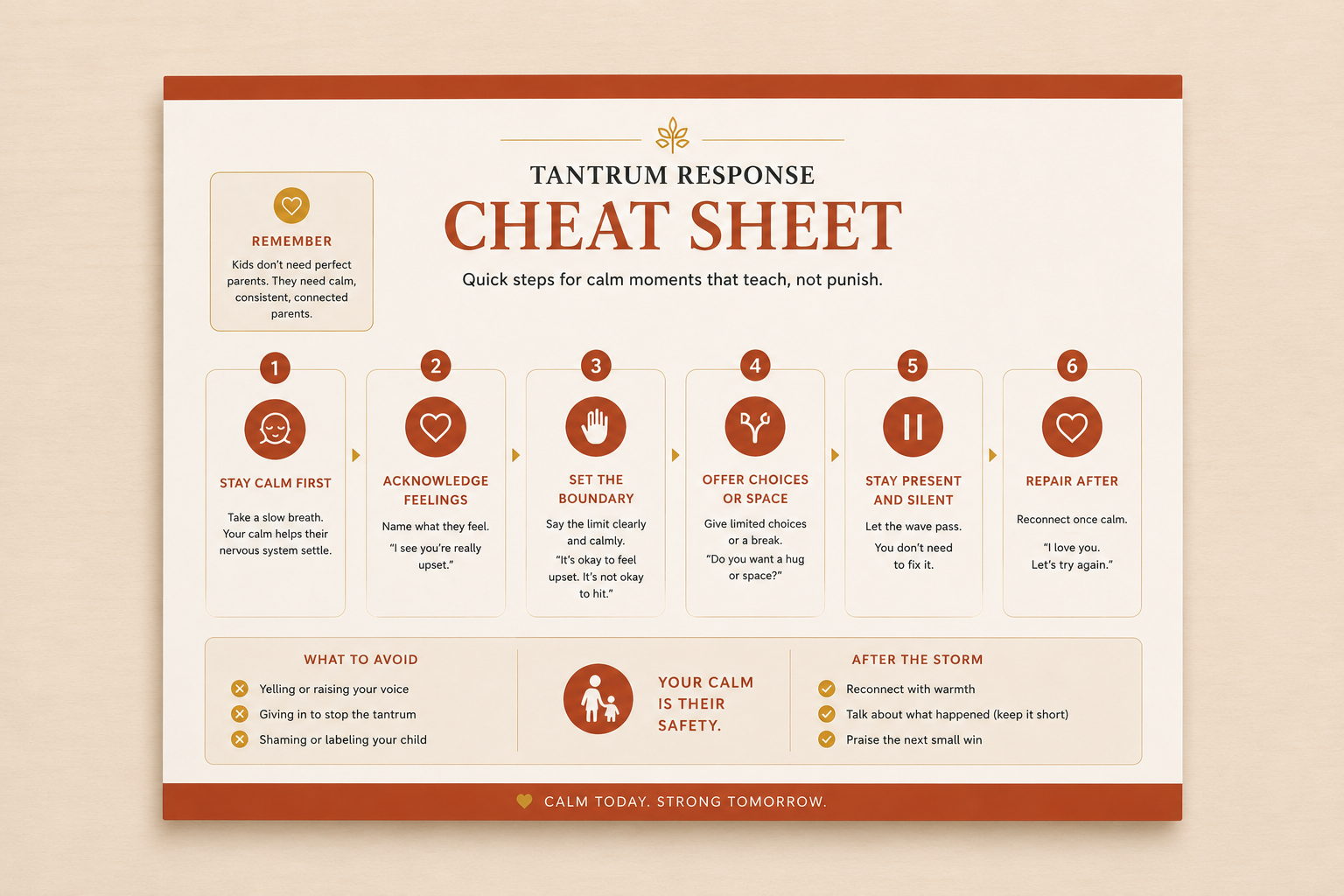
Tantrum Response Cheat Sheet
A printable one-page guide showing exactly what to say (and what not to say) during meltdowns, defiance, and emotional outbursts.

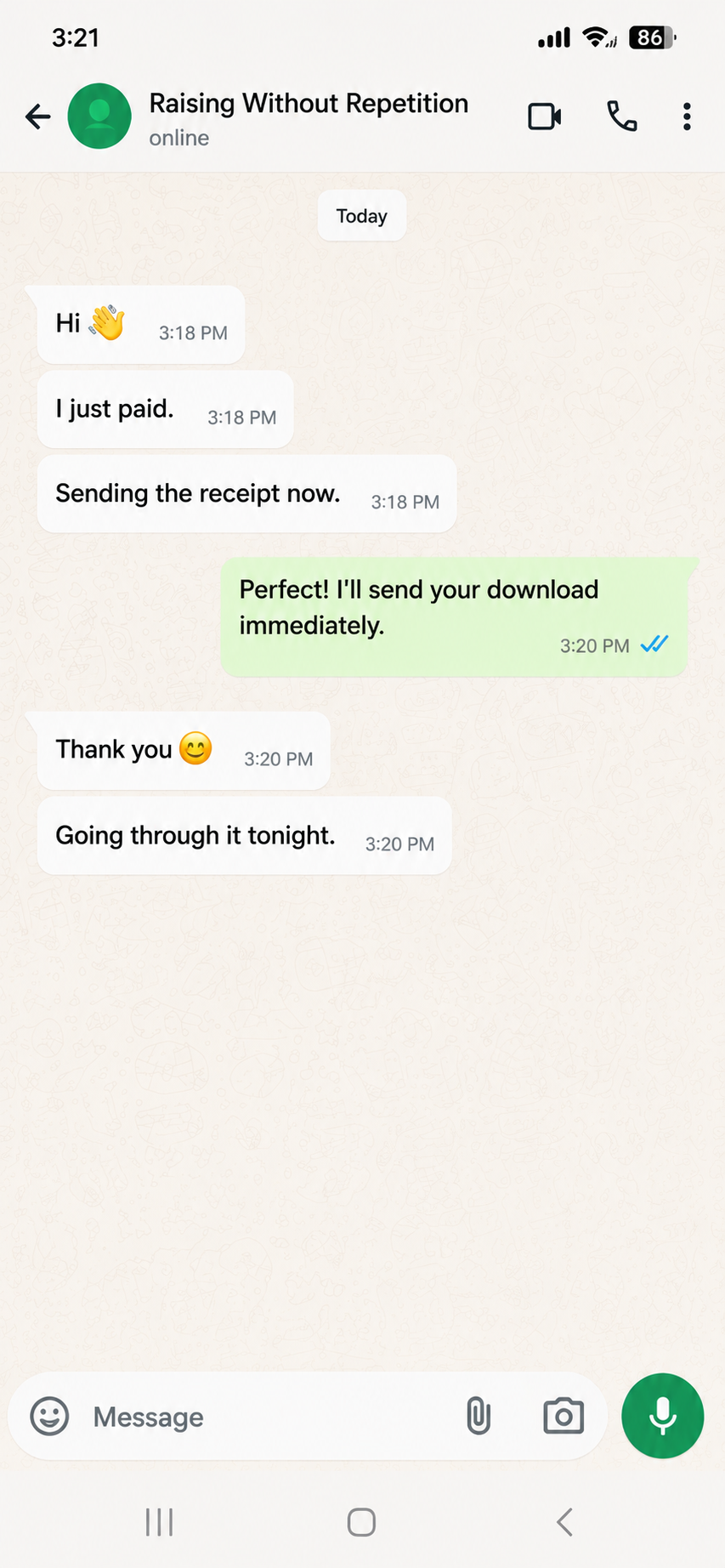
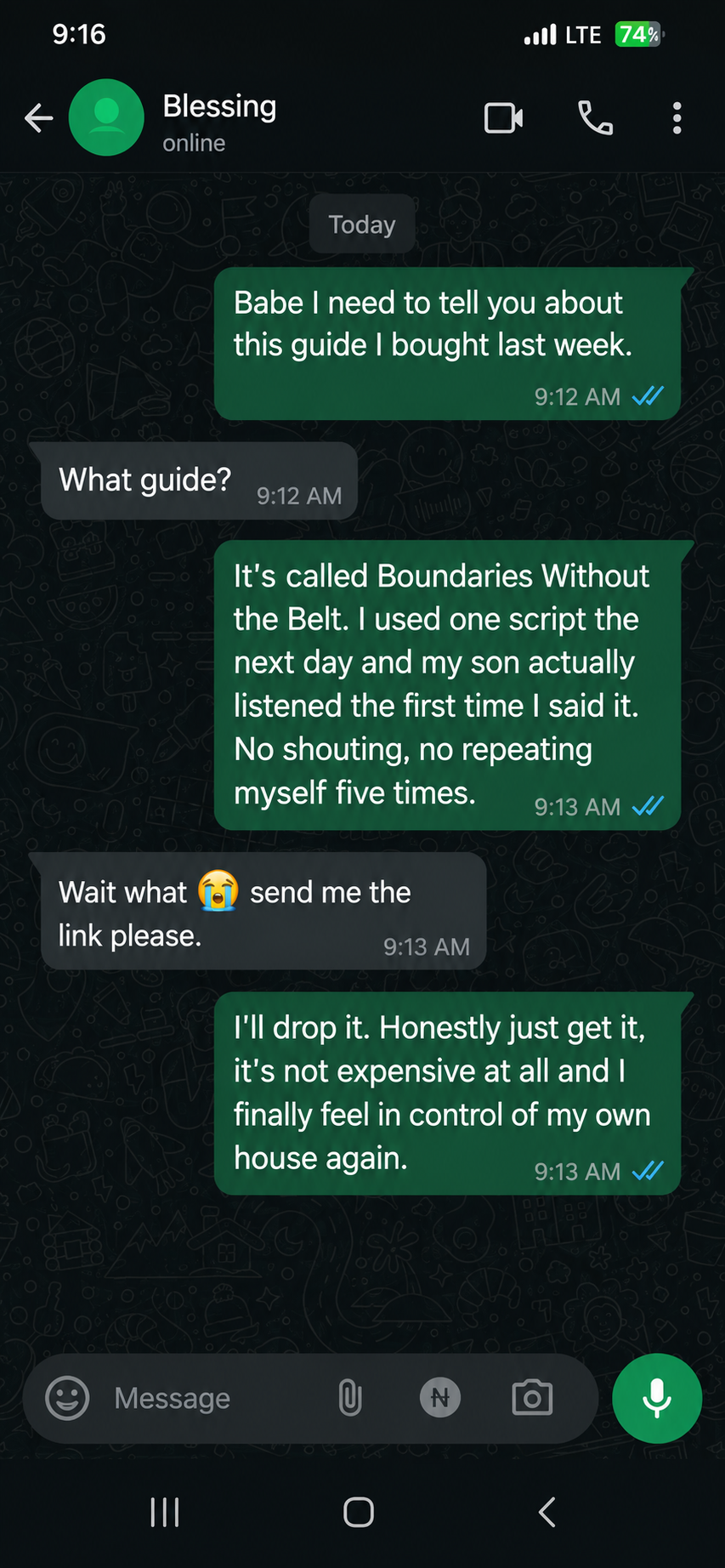
My Promise To You
If you go through this guide and feel it was not worth every naira, contact me and I will refund you in full. I am not interested in keeping money from a mother this guide did not help. I only want it in the hands of people it genuinely serves.
A Few Questions Before You Go
The full guide and both bonuses are delivered instantly to your email address as soon as your payment is confirmed.
You are covered by the guarantee above. If it genuinely does not help you, reach out and you will be refunded in full.
Yes, every payment on this page is processed securely through Selar.
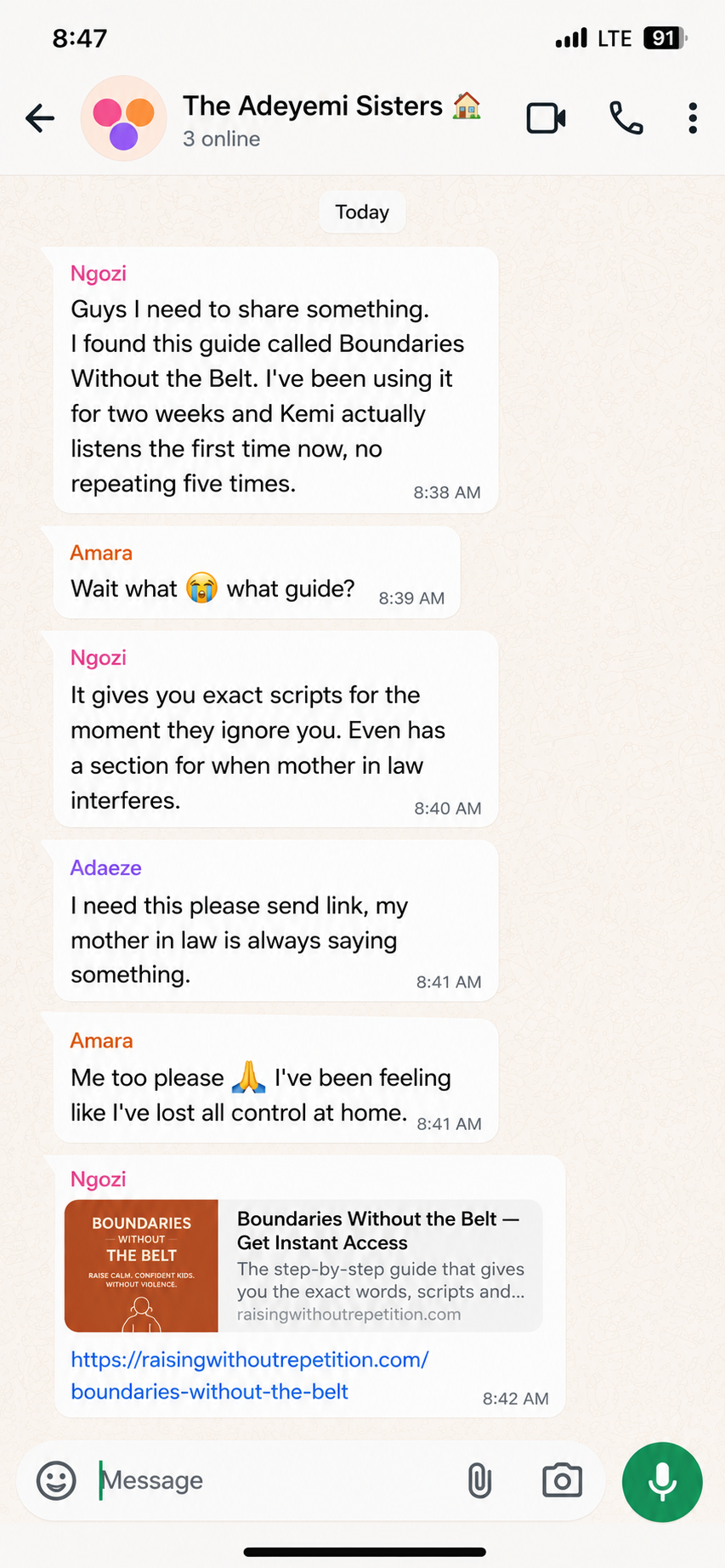
More Mothers, More Homes, Same Change
Two Paths From Here
If you get this guide today
If you close this page and wait
You already know which path you have been living in. This is the moment to choose the other one.